
Custom Paver Patios and Walkways
A paver system gives a landscape something flagstone and poured concrete can't: real precision. Every unit is the same size and thickness, which means pattern, alignment, and joint lines can be controlled exactly: the design decision isn't just what stone to use, it's how the units repeat, where they turn, and how the whole surface reads as one composition instead of a collection of individual pieces. As a paver contractor in Charlotte, Plant Man treats that precision as the starting point, not the whole job.
Custom Paver Patios, Paver Walkways, and Hardscape Installation
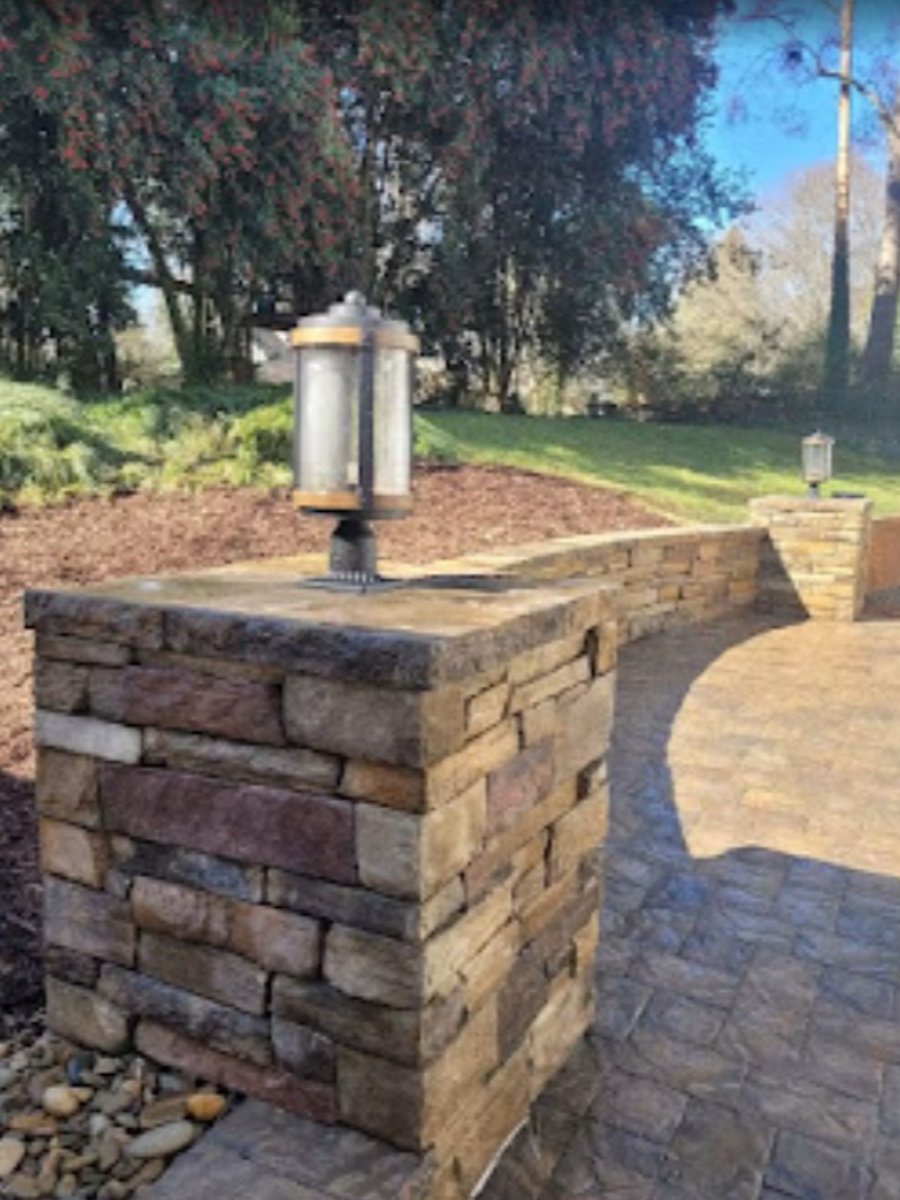
Custom paver patios, paver walkways, and outdoor living surfaces built as part of the larger landscape, not as an isolated slab. Paver patio design and paver patio installation are treated as one hardscape installation process here, planned alongside the grading, drainage, and structures around them. Phase 1 of the McCoy Water Feature is a direct example: a patio beneath the rear deck with a paver walkway and steps, built in about two weeks as the foundation the rest of that project's outdoor living space was built around.
Gallery


Design Considerations
Pattern and layout decisions (running bond, herringbone, basketweave, or a mixed-size layout) change how a space reads and how it directs movement, so they get chosen for the specific patio or walkway, not applied as a default. Scale and proportion matter just as much: a paver sized right for a small courtyard can feel busy or undersized on a large entertaining patio. Borders and transitions (a soldier course, a contrasting band, the line where paving meets a planting bed or lawn) are where a lot of paver work is won or lost: a clean edge restraint and a deliberate transition read as intentional; a paver field that just stops doesn't.
None of that matters if what's underneath isn't right. The same lesson that shaped the rebuild at Plaza Midwood Contemporary Garden applies here: proper base preparation, compaction, and grading for drainage matter as much as the paver itself, because a beautifully laid surface over an improperly prepared base won't stay that way. Joint treatment and edge restraint are what keep a paver field locked together over time instead of shifting or spreading at the edges.
Paver work also has to integrate with everything around it (steps, walls, fire pits, planting beds, and lighting), so those transitions get planned as part of the same design, not worked around after the fact.
Evidence
- McCoy Water Feature, where Phase 1 built a patio beneath the rear deck with a paver walkway and steps, approximately $26,000 in about two weeks, before Phase 2's koi waterfall was added
- Additional paver project photography from Plant Man's approved collection
Related Services
- Outdoor Living and Hardscaping, the broader outdoor-living context this work fits into
- Landscape Lighting Design, for paver patios and walkways designed with lighting in mind
- Landscape Design + Build, covering site and structural work, including grading and drainage, that every paver installation depends on
See The Plant Man Process for how a project like this gets designed.
Or call (704) 219-0160